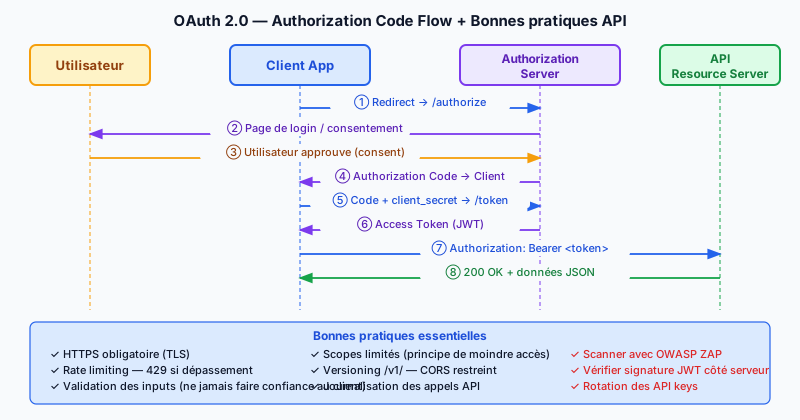
Securing a REST API: Authentication, Authorization and Best Practices
A poorly secured REST API exposes your data and users' data. Discover authentication patterns (API keys, JWT, OAuth 2.0) and essential best practices.
Read articleResources
Practical tips on the key points we check in every full audit.
A poorly secured REST API exposes your data and users' data. Discover authentication patterns (API keys, JWT, OAuth 2.0) and essential best practices.
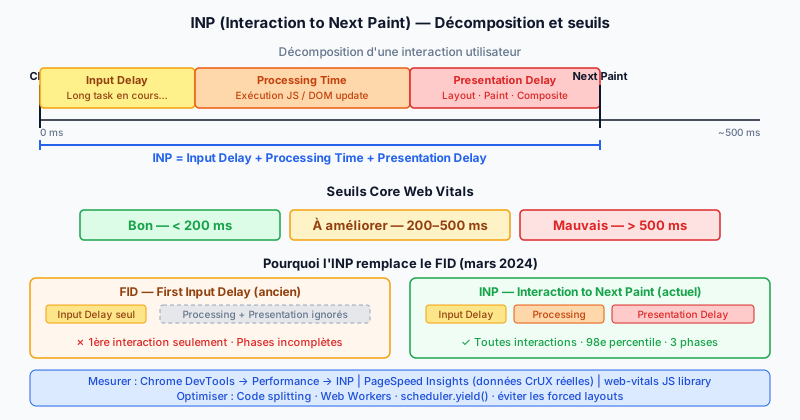
Read articleINP (Interaction to Next Paint) replaced FID (First Input Delay) as a Core Web Vitals metric in March 2024. It measures your page's overall responsiveness to all interactions.
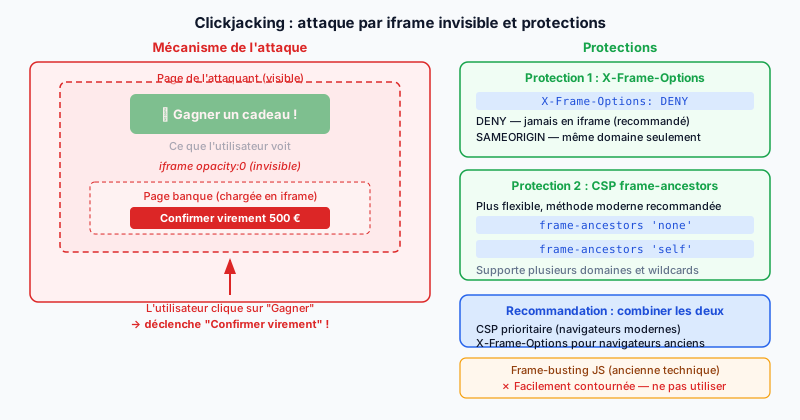
Read articleClickjacking overlays a transparent iframe on a page to trick users who click a legitimate button but trigger a hidden action. Two protections: X-Frame-Options and CSP frame-ancestors.
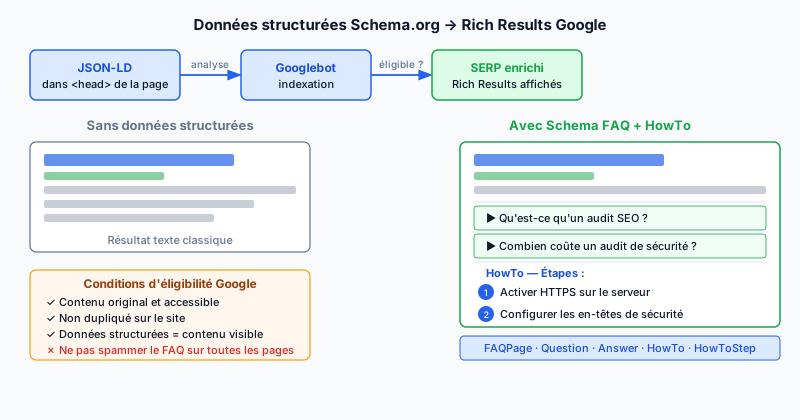
Read articleSchema.org FAQ and HowTo types allow Google to display your Q&As and steps directly in search results, increasing your visibility and click-through rates.
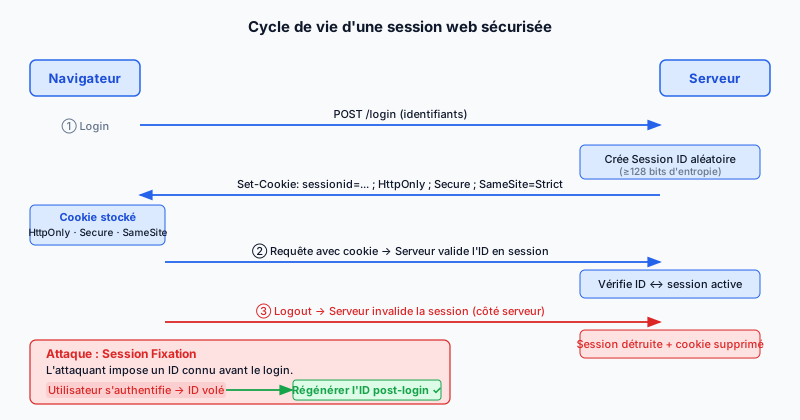
Read articlePoor session management causes many breaches. Learn the best practices: session ID, expiration, post-login regeneration and protection against session fixation.
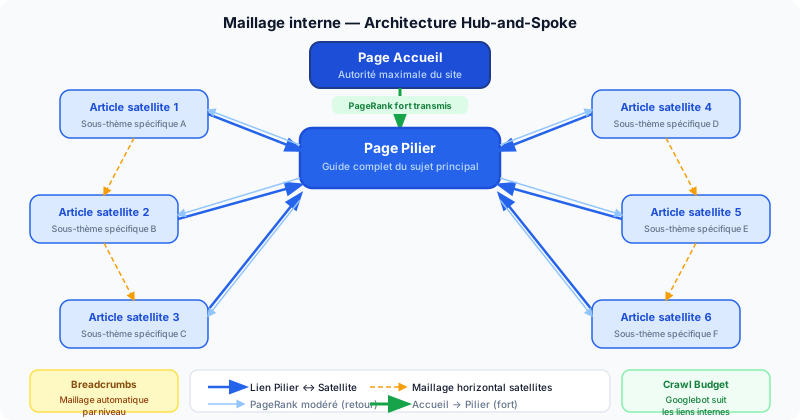
Read articleInternal linking is the practice of creating links between your own pages. It distributes Page Rank, improves Googlebot crawling and guides your visitors.
Read articleAccessibility isn't just a legal requirement — it's an SEO quality factor. Alt attributes, WCAG contrast ratios, ARIA: what these technical terms actually mean.
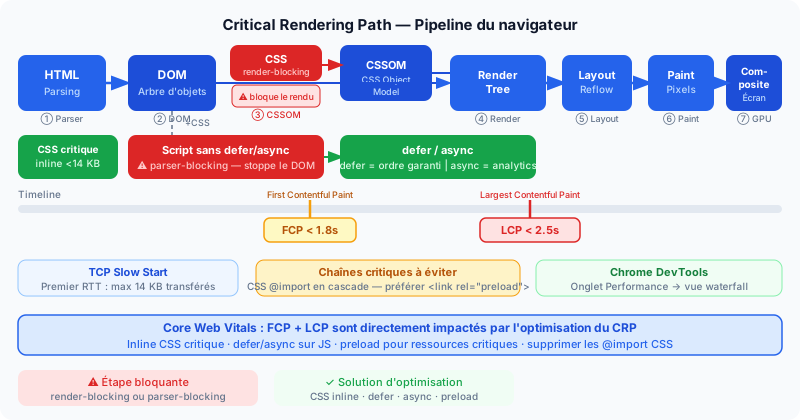
Read articleThe Critical Rendering Path is the sequence of steps a browser performs to display the first frame on screen. Optimizing it directly reduces your LCP.
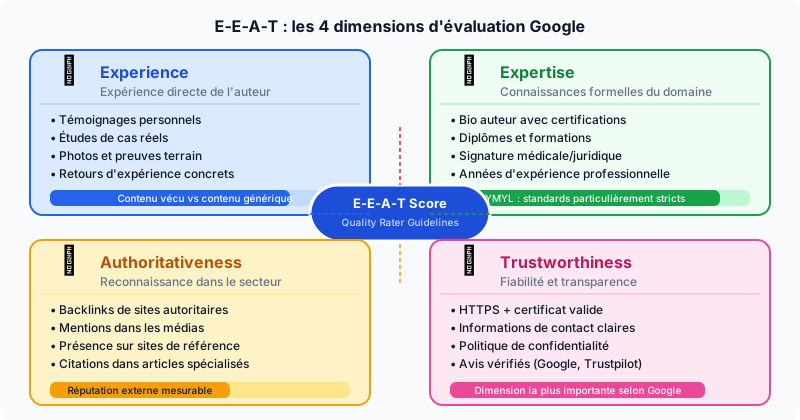
Read articleE-E-A-T (Experience, Expertise, Authoritativeness, Trustworthiness) is the framework Google uses to evaluate content quality. Essential for SEO on YMYL sites.
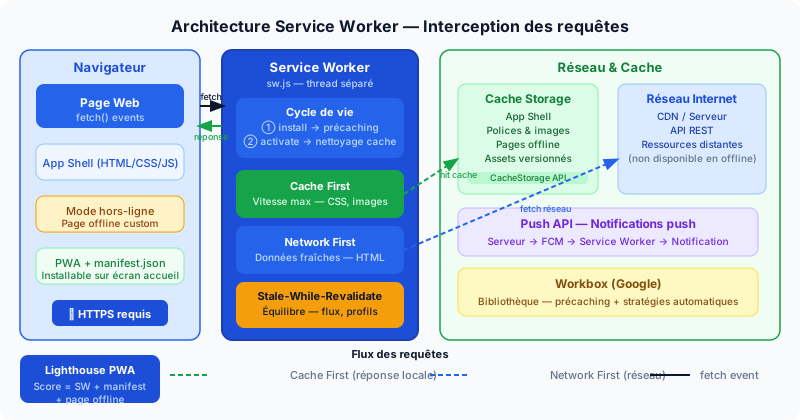
Read articleA Service Worker is a JavaScript script that intercepts requests between the browser and network. It enables offline caching, push notifications and PWAs (Progressive Web Apps).
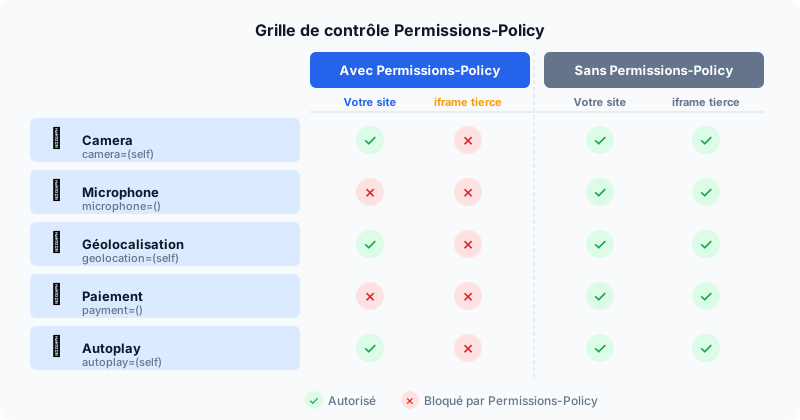
Read articleThe Permissions-Policy header (formerly Feature-Policy) restricts access to the camera, microphone, geolocation and other browser APIs for your site and its iframes.
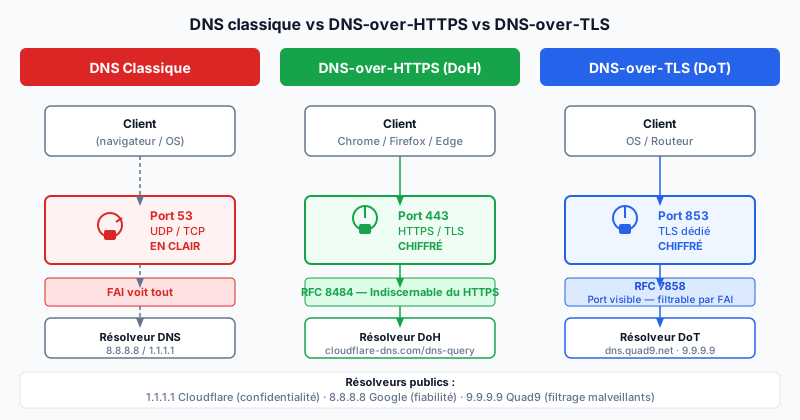
Read articleClassic DNS (Domain Name System) queries travel in plain text on port 53. DoH (DNS-over-HTTPS) and DoT (DNS-over-TLS) encrypt these queries to protect privacy.
Read articleRankings depend as much on your HTML tags as on your content. Title, meta description, Open Graph and heading structure: what TheSiteFuse checks and why it matters.
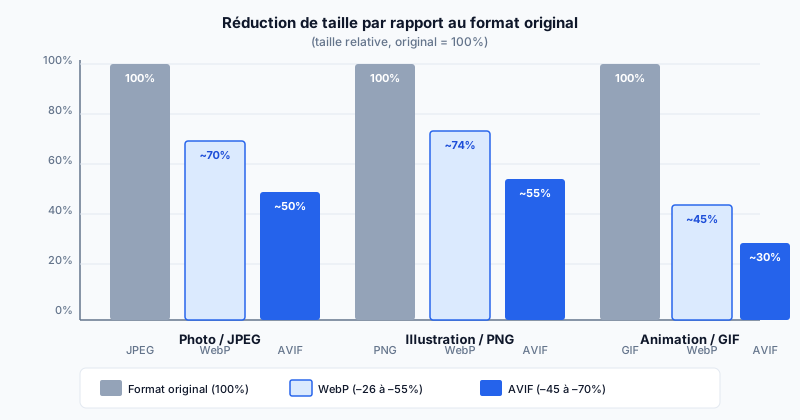
Read articleWebP offers 30% better compression than JPEG. AVIF goes even further with 50% savings. Learn the differences, browser compatibility and how to migrate your images.
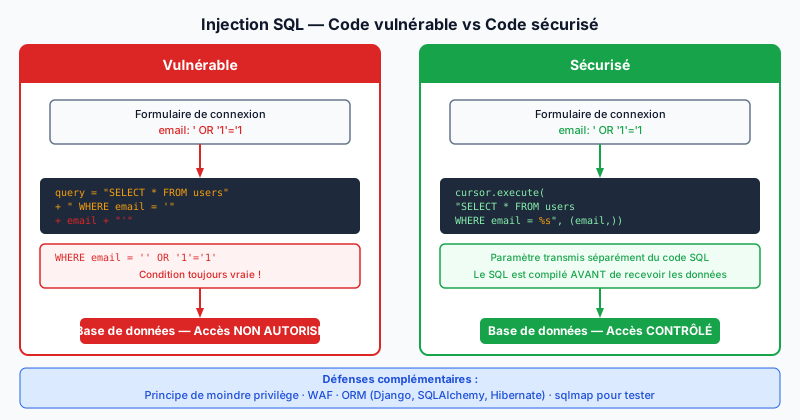
Read articleSQL injection (SQLi) inserts malicious SQL commands into a database query. It is one of the oldest and most widespread web application vulnerabilities.
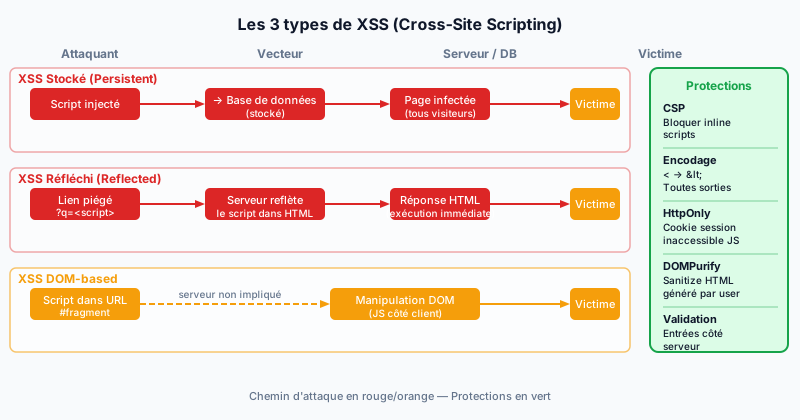
Read articleXSS (Cross-Site Scripting) is the injection of malicious JavaScript into a web page. Three variants exist: stored, reflected and DOM-based. Here's how to protect yourself.
Read articleWithout SPF, DKIM and DMARC, anyone can send emails impersonating you. These three DNS records are your domain's essential shield.
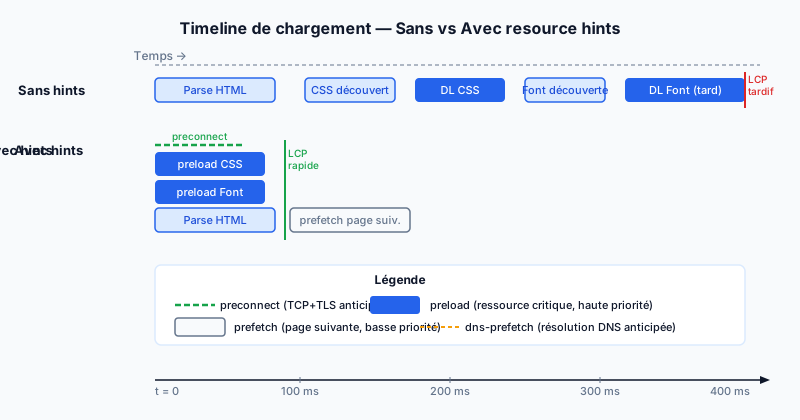
Read articleResource hints (preload, prefetch, preconnect, dns-prefetch) allow the browser to download critical resources before they are discovered in the HTML source.
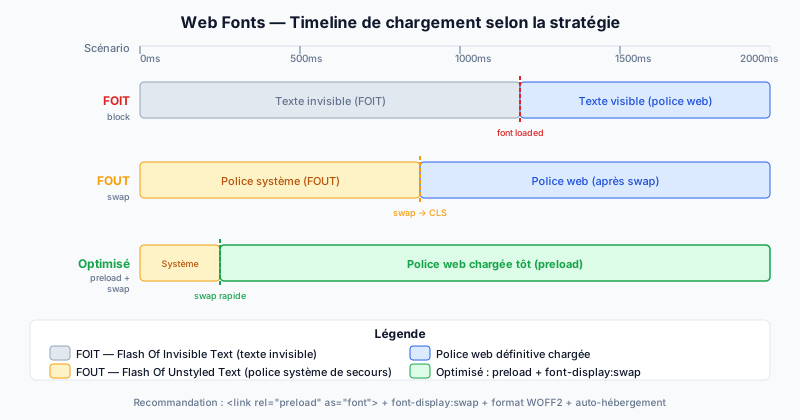
Read articleWeb fonts directly impact LCP and CLS. Discover FOUT, FOIT, font-display: swap, preloading and best practices for Google Fonts.
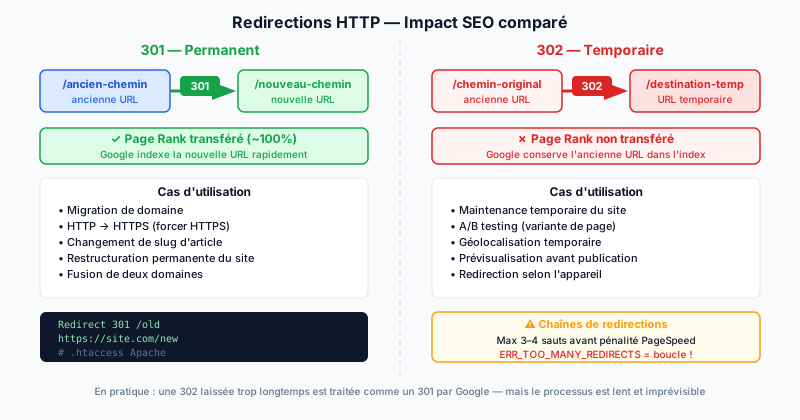
Read articleA 301 (permanent) redirect transfers the SEO Page Rank to the new URL. A 302 (temporary) does not. Choosing the right HTTP code is crucial for your search rankings.
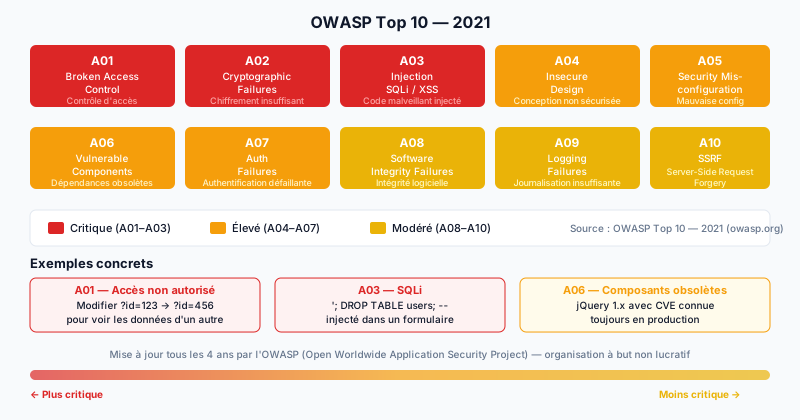
Read articleThe OWASP (Open Worldwide Application Security Project) Top 10 lists the most frequent web security risks. An essential reference for securing your web applications.
Read articleSince 2021, Google has included LCP, INP and CLS as ranking factors. Understanding these metrics is essential to improve your SEO and your visitors’ experience.
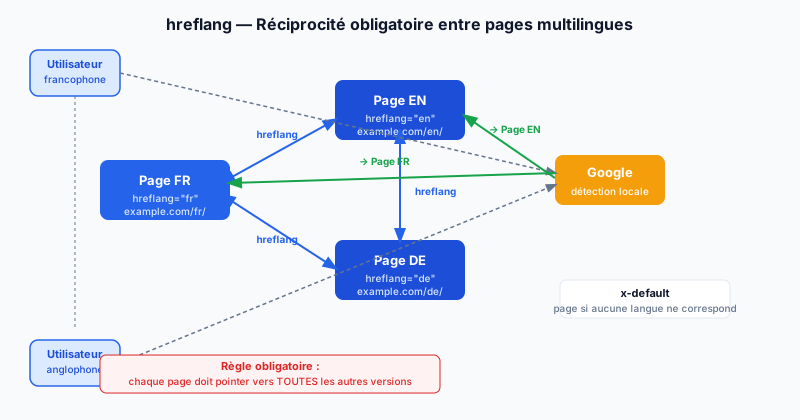
Read articleThe hreflang attribute tells Google the language and country targeted by each version of your page. Essential for multilingual sites or sites with regional versions.
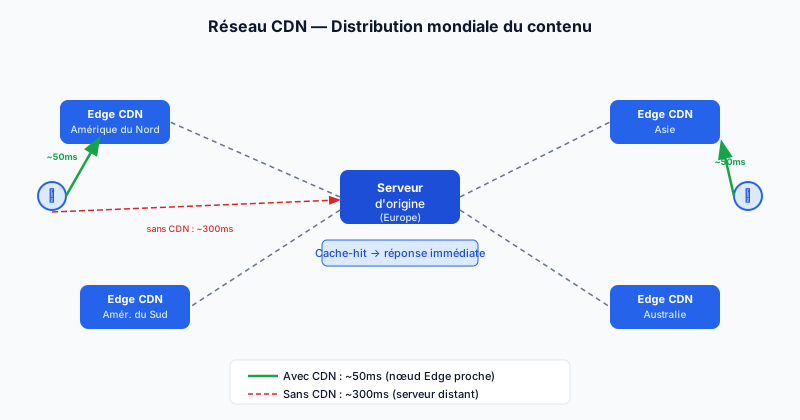
Read articleA CDN (Content Delivery Network) distributes your static files from servers close to your visitors. Discover how Edge caching works and the available solutions.
Read articleThe padlock in your browser protects your visitors. Learn how HTTPS, SSL/TLS, HSTS and security headers form an essential shield for your site.
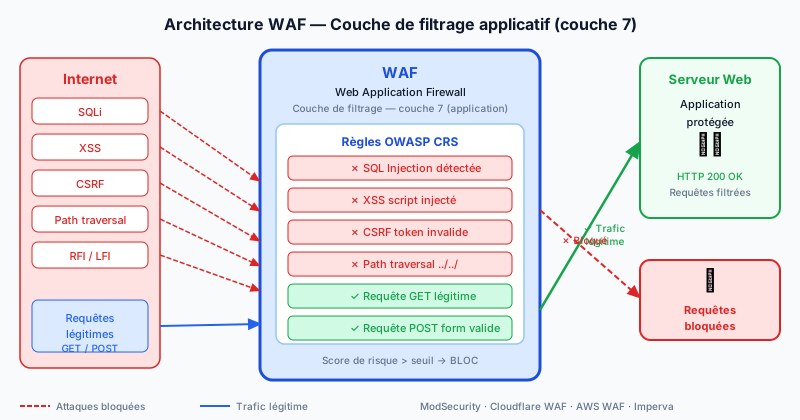
Read articleA WAF (Web Application Firewall) filters malicious HTTP requests before they reach your application. Discover how it works and the available solutions.
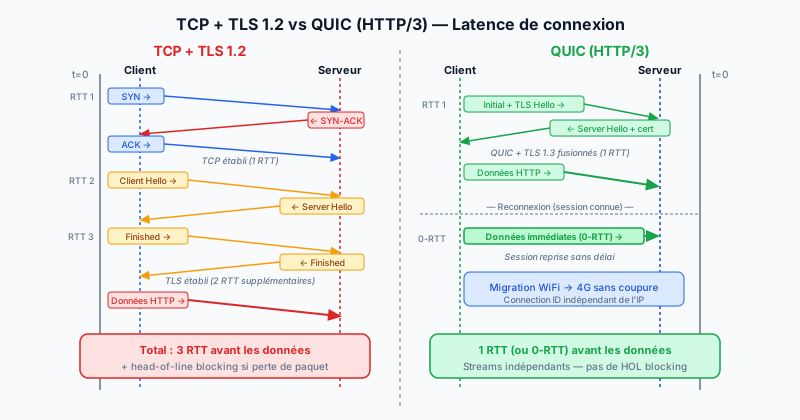
Read articleHTTP/3 replaces TCP with QUIC (UDP+TLS 1.3). Less latency, 0-RTT reconnection, and no head-of-line blocking. Discover how this revolutionary protocol works.
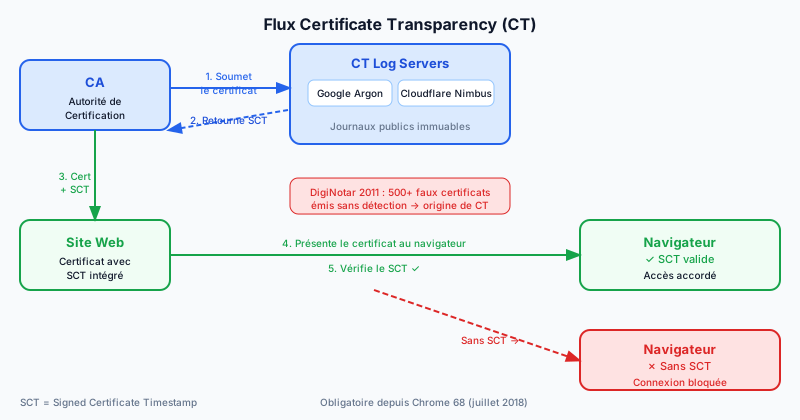
Read articleCT (Certificate Transparency) is a public log system that records all issued SSL certificates. Mandatory since 2018, it allows detecting fraudulent certificates.
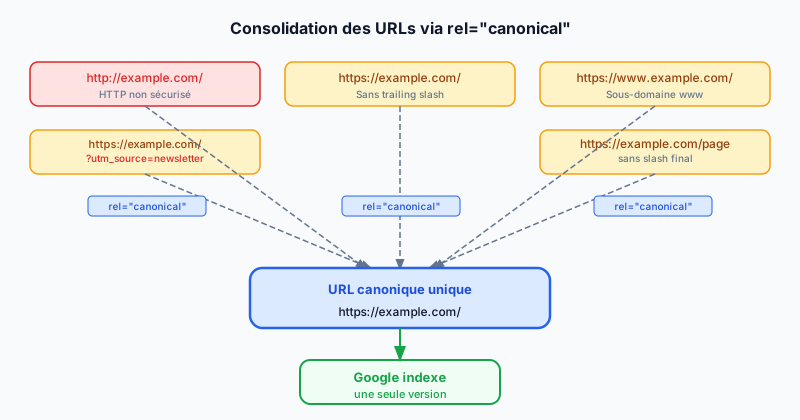
Read articleThe canonical tag (rel="canonical") tells Google the preferred version of a page. Essential for e-commerce sites, category filters and paginated pages.
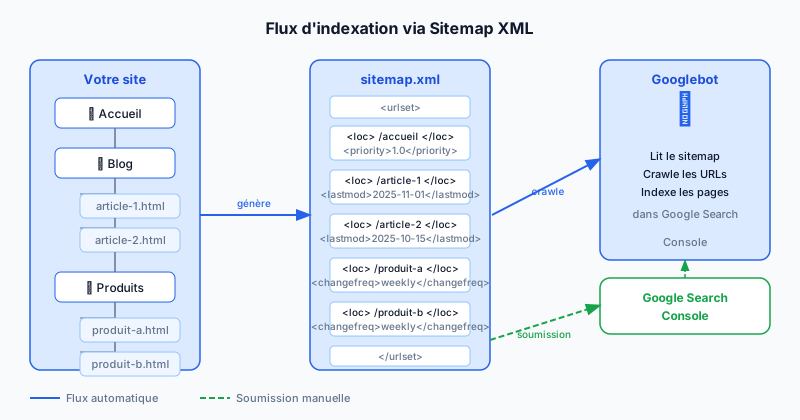
Read articleAn XML sitemap helps Googlebot discover all your pages. Learn the structure, limits, priority and changefreq attributes, and how to submit your sitemap.
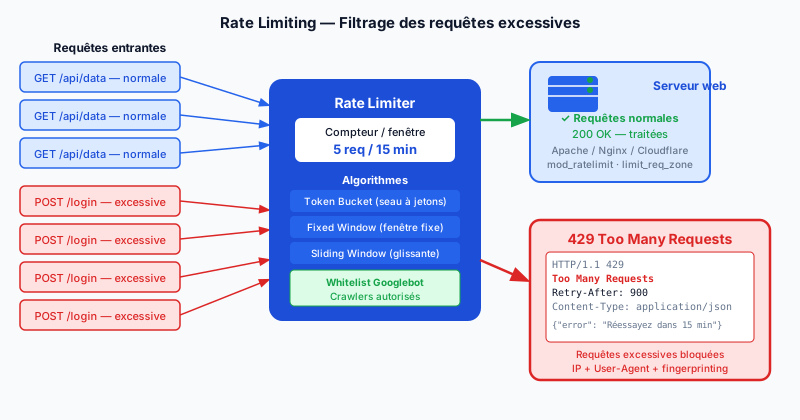
Read articleRate limiting blocks repeated attempts on your login forms and APIs. Discover the algorithms, HTTP codes and Apache/Nginx solutions.
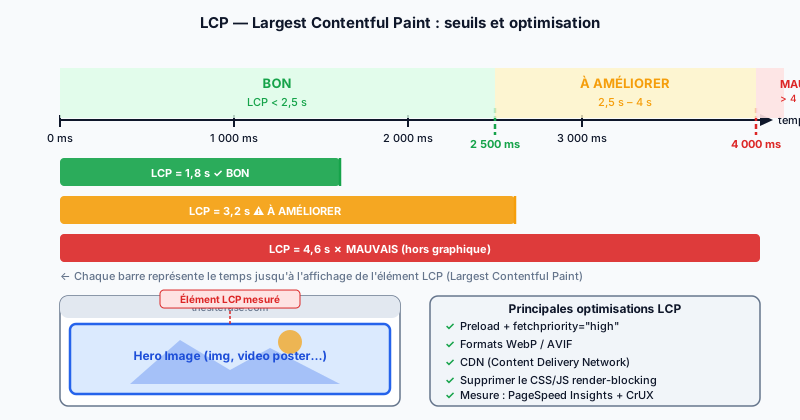
Read articleLCP (Largest Contentful Paint) measures the loading time of the largest visible element. Google has integrated this metric into its ranking algorithm since 2021.
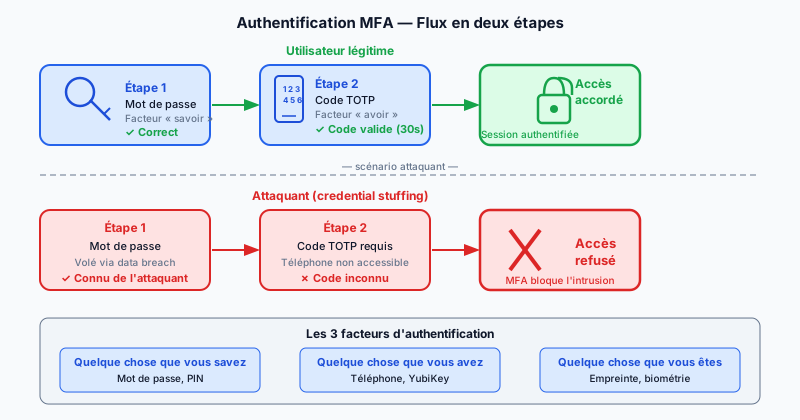
Read articleMFA (Multi-Factor Authentication) adds a protection layer beyond the password. Discover TOTP, SMS, passkeys and how to implement 2FA on your site.
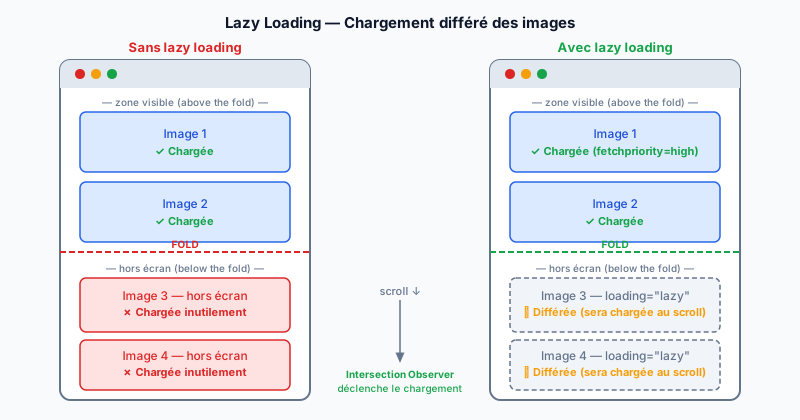
Read articleLazy loading defers off-screen image loading. Discover the loading="lazy" attribute, the Intersection Observer API, and its impact on Core Web Vitals.
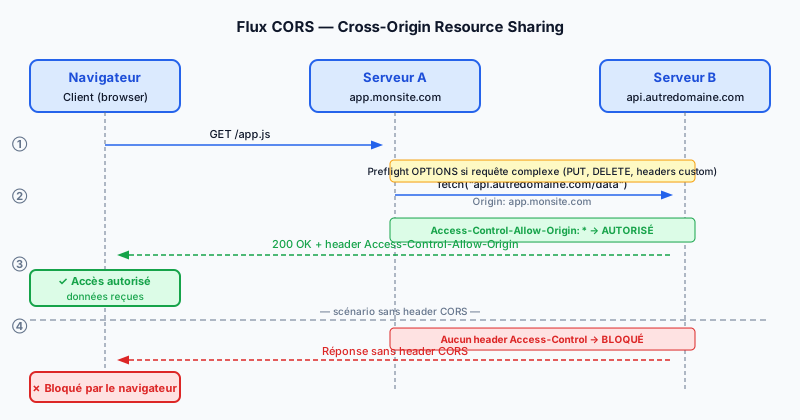
Read articleCORS (Cross-Origin Resource Sharing) controls requests between different domains. Understanding Access-Control headers is essential to secure your APIs.
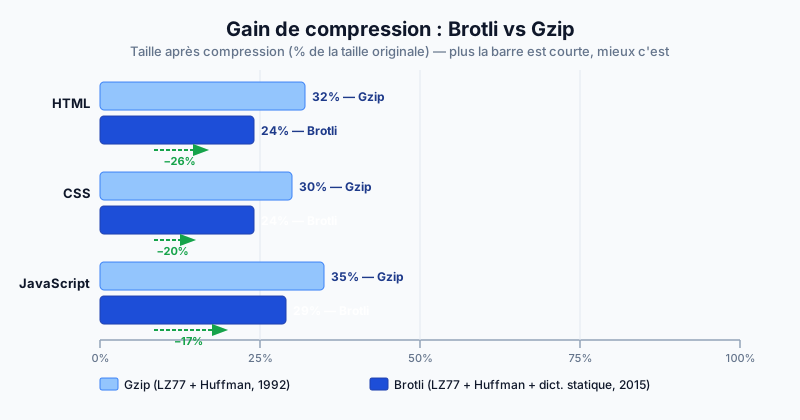
Read articleBrotli compresses better than Gzip on HTML, CSS and JavaScript. Discover the technical differences, real gains and how to enable Brotli on Apache and Nginx.
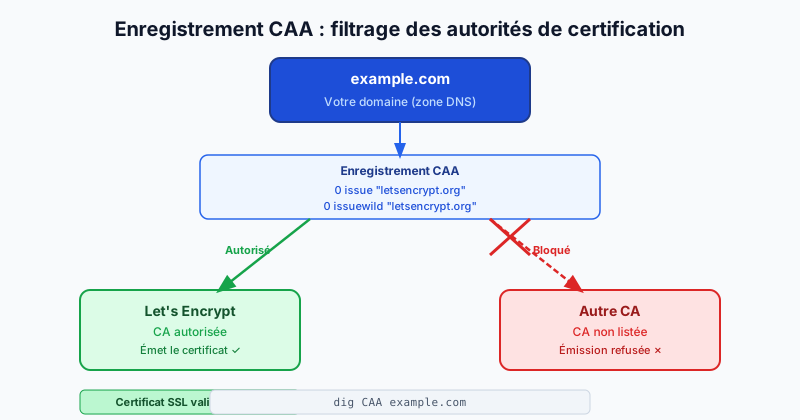
Read articleThe CAA (Certification Authority Authorization) DNS record restricts which certificate authorities can issue certificates for your domain.
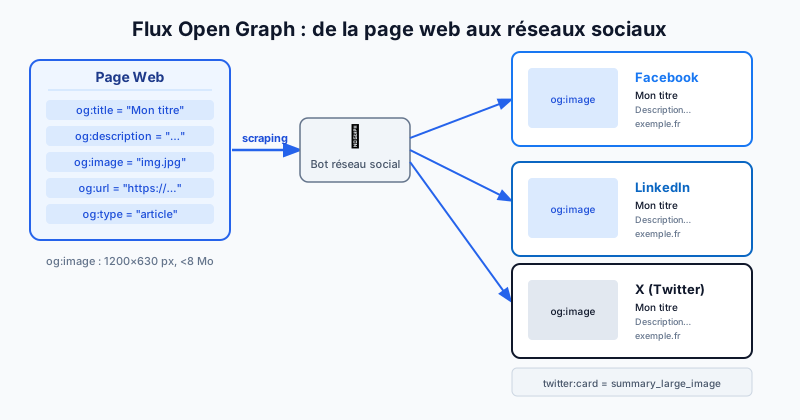
Read articleOpen Graph tags control how your page appears when shared on Facebook, LinkedIn or X. Learn the essential tags and how to test them.
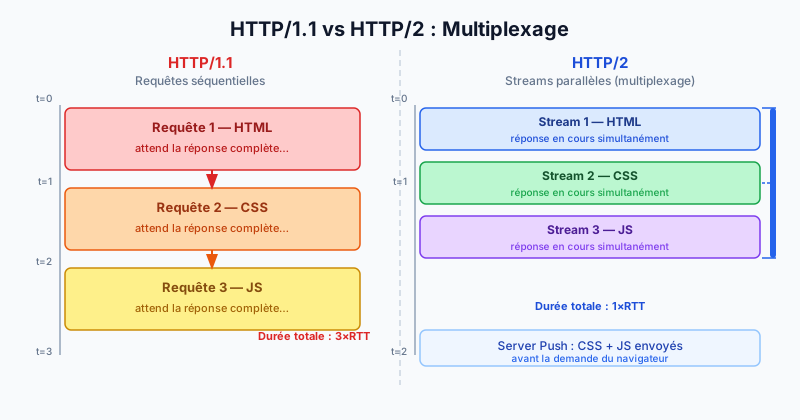
Read articleHTTP/2 allows multiple simultaneous requests over a single TCP connection. Learn about multiplexing, HPACK header compression and Server Push to speed up your site.
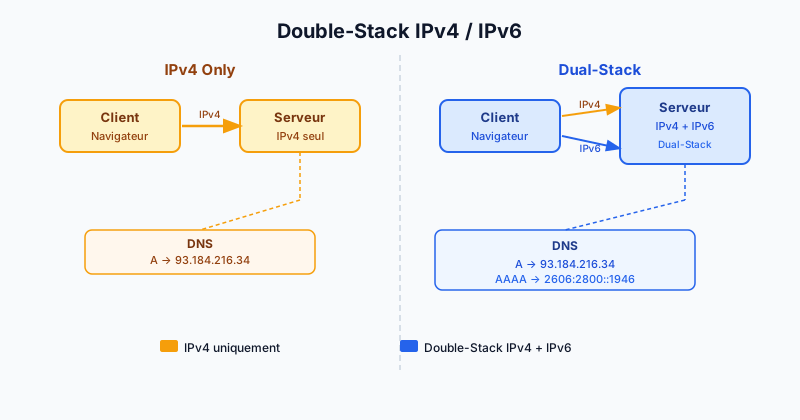
Read articleIPv6 coexists with IPv4 in dual-stack mode. Learn why enabling IPv6 improves your site's accessibility and how to check your DNS configuration.
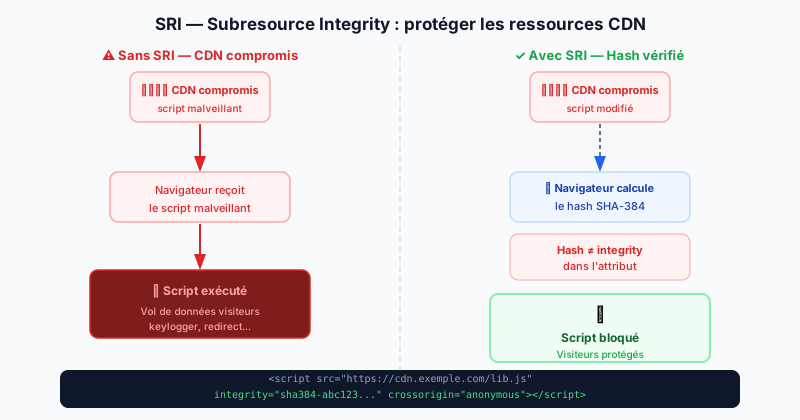
Read articleSRI (Subresource Integrity) verifies the integrity of scripts and CSS loaded from external CDNs. Discover how the integrity attribute protects your visitors.
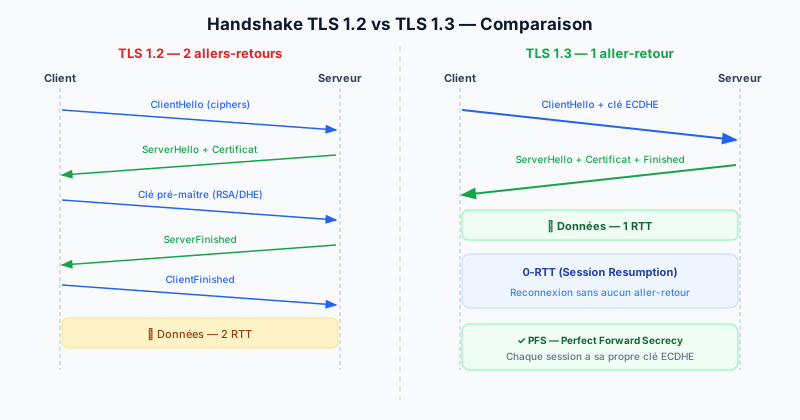
Read articleTLS 1.3 reduces connection latency and removes dangerous algorithms from TLS 1.2. Learn how to enable TLS 1.3 on Apache and Nginx to secure and speed up your site.
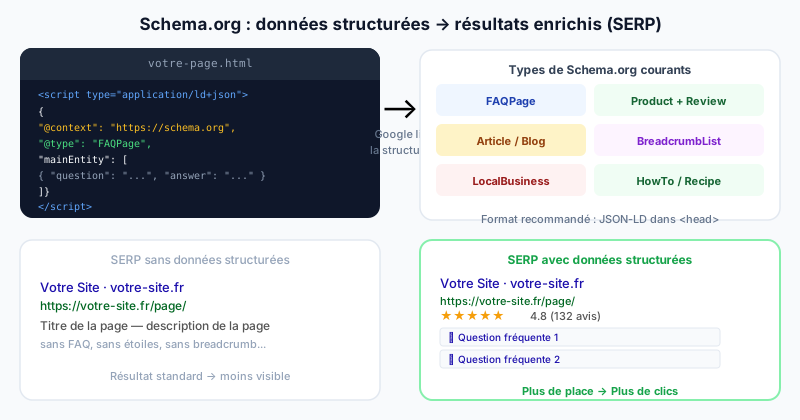
Read articleSchema.org structured data allows Google to display rich snippets (stars, FAQ, prices) in results. Learn how to implement them in JSON-LD.
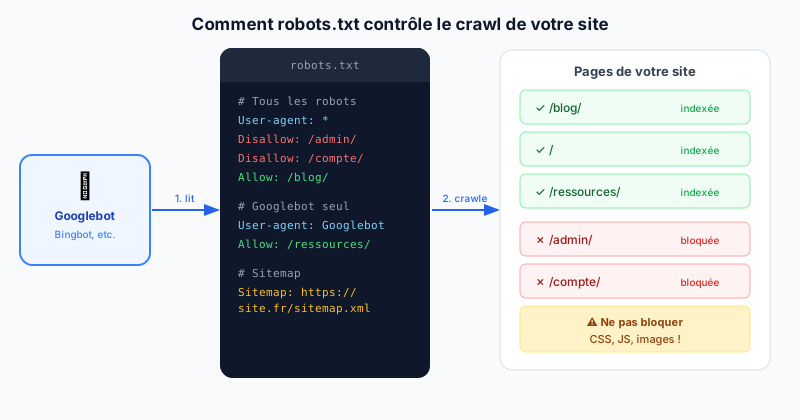
Read articleThe robots.txt file tells search engines which pages to crawl. Learn to configure it without making the errors that penalise your search engine rankings.
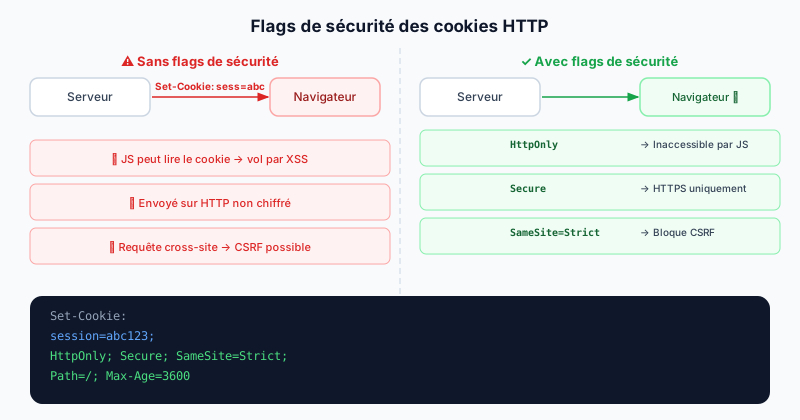
Read articleThe Secure, HttpOnly and SameSite flags protect your cookies against XSS theft and CSRF attacks. Learn how to configure them correctly on Apache and Nginx.
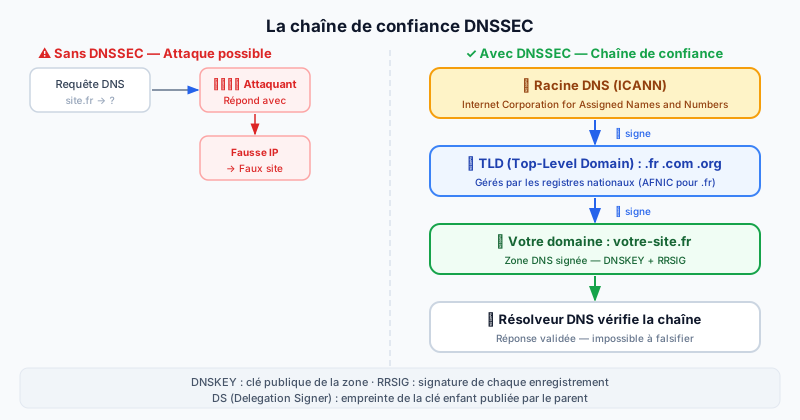
Read articleDNSSEC adds a cryptographic signature to DNS responses to guarantee their authenticity. Learn how this technology works and how to enable it with your registrar.
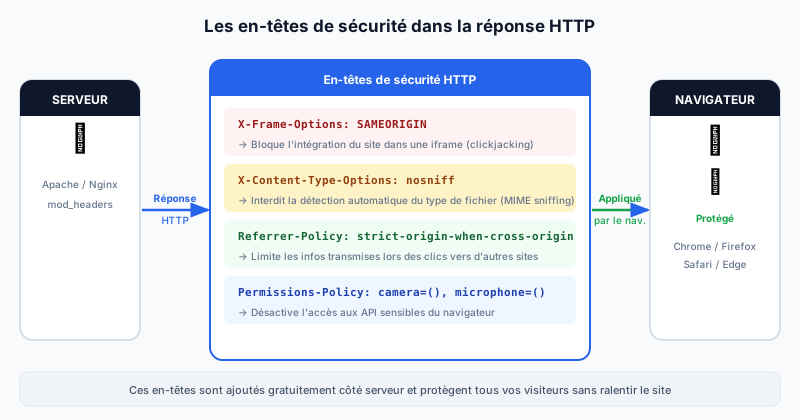
Read articleHTTP security headers protect visitors against clickjacking, MIME sniffing and other attacks. Complete guide to configure them on Apache and Nginx.
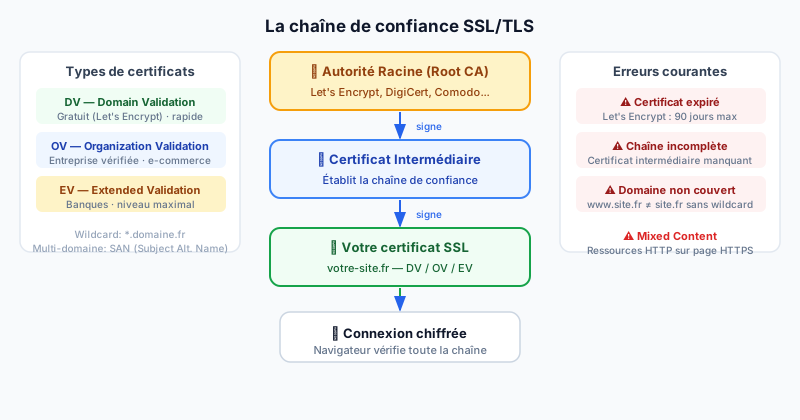
Read articleA valid SSL certificate is essential for visitor trust and Google ranking. Learn about certificate types, renewal, and common errors to avoid.
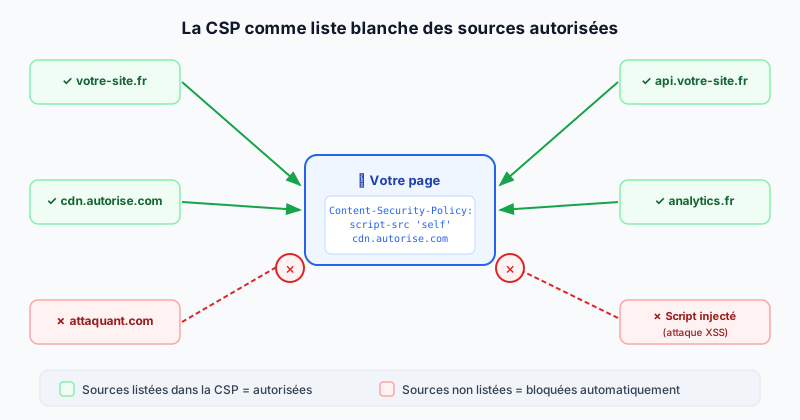
Read articleCSP is your best ally against XSS injections. Learn how to define an effective content security policy and test it without breaking your site.
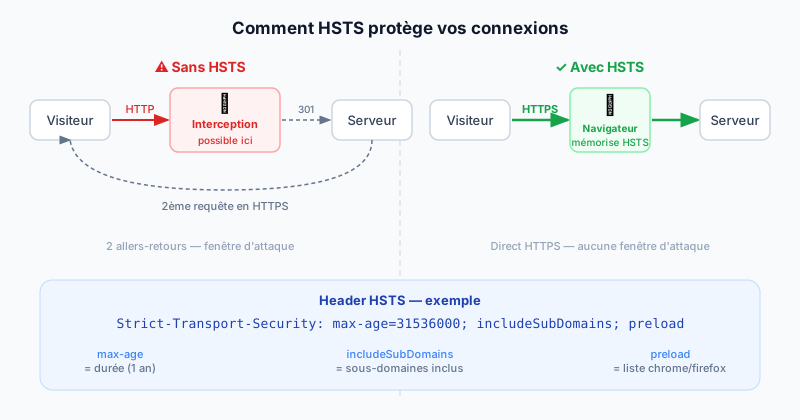
Read articleThe HTTP Strict-Transport-Security header forces browsers to always use HTTPS. Learn how to enable it and prevent downgrade attacks on your website.
Read article120 checks covering security, DNS, SEO, performance and content — full report in 5 minutes.
Run a free audit