What is Content Security Policy?
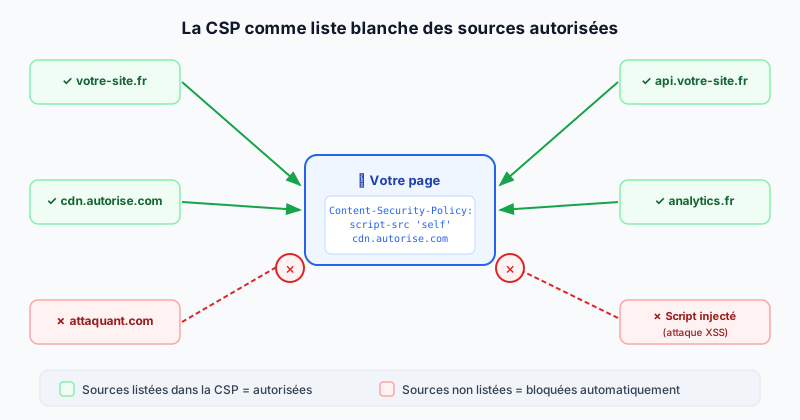
Content Security Policy (CSP) is an HTTP header that defines which content sources the browser is allowed to load: JavaScript scripts, CSS stylesheets, images, fonts, iframes. It acts as an allowlist: anything not on the list is automatically blocked, even if malicious code manages to be injected into the page.
The attack CSP blocks: XSS
XSS (Cross-Site Scripting) is one of the most common web attacks. It involves injecting malicious JavaScript code into a page viewed by other users — via a form, a comment, or a vulnerability in a CMS (Content Management System, like WordPress or Joomla). This script can then steal session cookies (authentication data stored in the browser), redirect visitors to a fraudulent site, or display fake forms to harvest passwords.
A well-configured CSP blocks the execution of any unauthorised script, even if the injection has succeeded.
Essential CSP directives
- default-src 'self': by default, only allow resources from the same domain
- script-src: allowlist of authorised JavaScript sources
- style-src: authorised CSS sources
- img-src: authorised image sources
- frame-src 'none': forbids loading any iframe
- connect-src: authorised URLs for network calls (fetch, XMLHttpRequest)
CSP example on Apache
Header always set Content-Security-Policy "default-src 'self'; script-src 'self' https://cdn.example.com; style-src 'self' 'unsafe-inline'; img-src 'self' data: https:; frame-src 'none'"Deploy without breaking your site: Report-Only mode
The Content-Security-Policy-Report-Only directive lets you test a CSP in monitoring mode: violations are reported (in the browser console or to a report URL) without content being blocked. Essential for a gradual rollout without risking service interruption.
Header always set Content-Security-Policy-Report-Only "default-src 'self'; report-uri /csp-report"Common pitfalls to avoid
'unsafe-inline' and 'unsafe-eval' in script-src cancel much of CSP's protection. 'unsafe-inline' allows scripts written directly in HTML (<script> tags without an external source), which is exactly the XSS attack vector. Prefer hashes (cryptographic fingerprints of the code: 'sha256-...') or nonces (random single-use tokens: 'nonce-abc123') for legitimate inline scripts.
Check your CSP
TheSiteFuse analyses your CSP, detects missing directives and dangerous values. Audit your site for free to get a detailed report and concrete recommendations.