History: From E-A-T to E-E-A-T
In 2014, Google published its Quality Rater Guidelines, an internal document intended for human evaluators who rate the quality of web pages. It introduced the concept of E-A-T: Expertise, Authoritativeness, Trustworthiness. In December 2022, Google added a fourth dimension: Experience (direct personal experience), creating the acronym E-E-A-T.
These criteria do not map directly to a single algorithmic signal, but they guide how Google perceives and ranks content — especially since the Core Updates (major algorithm updates).
YMYL: High-Stakes Domains
E-E-A-T standards apply to all sites, but they are especially critical for YMYL (Your Money or Your Life) domains — that is, topics that can significantly affect a person's health, safety, financial situation or wellbeing. This includes medicine, finance, law and safety advice. For these domains, Google applies much stricter evaluation standards.
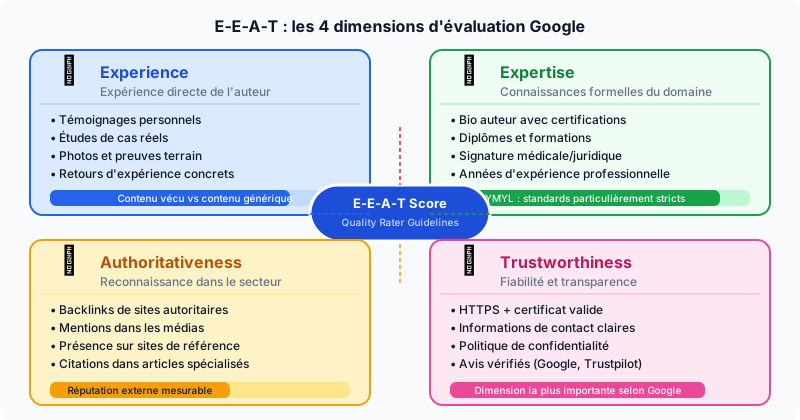
The 4 Dimensions of E-E-A-T
Experience — Does the author have direct, first-hand experience with the topic? An article about a hiking trail written by someone who actually walked it, with personal photos and anecdotes, scores better than a generic piece. Testimonials, case studies and concrete feedback reinforce this signal.
Expertise — Does the author have formal knowledge or training in the field? An author bio mentioning certifications, degrees or years of professional experience strengthens perceived expertise. For medical sites, a physician's byline is nearly indispensable.
Authoritativeness — Are the site and author recognized as references in their sector? Backlinks (inbound links) from authoritative sites, mentions in reputable media and presence on fact-checking sites all contribute to authority.
Trustworthiness — Is the site reliable and transparent? HTTPS, clear contact information (address, email, phone number), a compliant privacy policy, legal notices, and verified customer reviews (via Google, Trustpilot) all build trust.
Technical Signals: Structured Data
Structured data (schema.org in JSON-LD format) allows you to explicitly communicate to Google who the author is, which organization is responsible for the content, and what users think of it. The most useful schemas for E-E-A-T are Author, Organization, Person, Review and MedicalOrganization.
Practical Strategies to Implement
- Create a detailed About page presenting the team, history and values
- Add an author bio with photo, links to professional profiles (LinkedIn, etc.) and certifications
- Cite reliable sources in content (studies, official reports, scientific publications)
- Ensure legal notices and privacy policy are easily accessible
- Collect verified reviews and display them with the corresponding structured data
These signals are cumulative: no single element is sufficient on its own. It is the overall picture that builds a solid E-E-A-T reputation, particularly after each Core Update.
Evaluate Your SEO Authority
Is your site sending the right E-E-A-T signals to Google? Run a free audit to identify the technical and editorial gaps that are holding back your rankings.